Expert Pool Equipment Inspection & Minor Repairs in Citrus Heights, CA
In Citrus Heights, backyard pools work hard through long Sacramento Valley summers. Our pool equipment inspection services check every pump, filter, and heater to catch problems before they interrupt your swim season. We offer same-week scheduling, detailed inspection reports, and on-site minor repairs when needed. Equipment checks pair naturally with routine pool care in Citrus Heights, giving you one provider who knows your system inside and out.
Complete Pool Equipment Inspections Cover Every Critical Component
Our inspections give you a full picture of your pool system's health. We check every mechanical and electrical part that keeps your water moving and your pool safe. Citrus Heights homeowners preparing for summer or selling a home benefit most from a complete diagnostic report.
Sacramento Valley heat puts extra stress on pump motors and heater parts. Pools in Stock Ranch and Birdcage Heights run hard from May through September. That wear shows up in ways you cannot always see or hear.
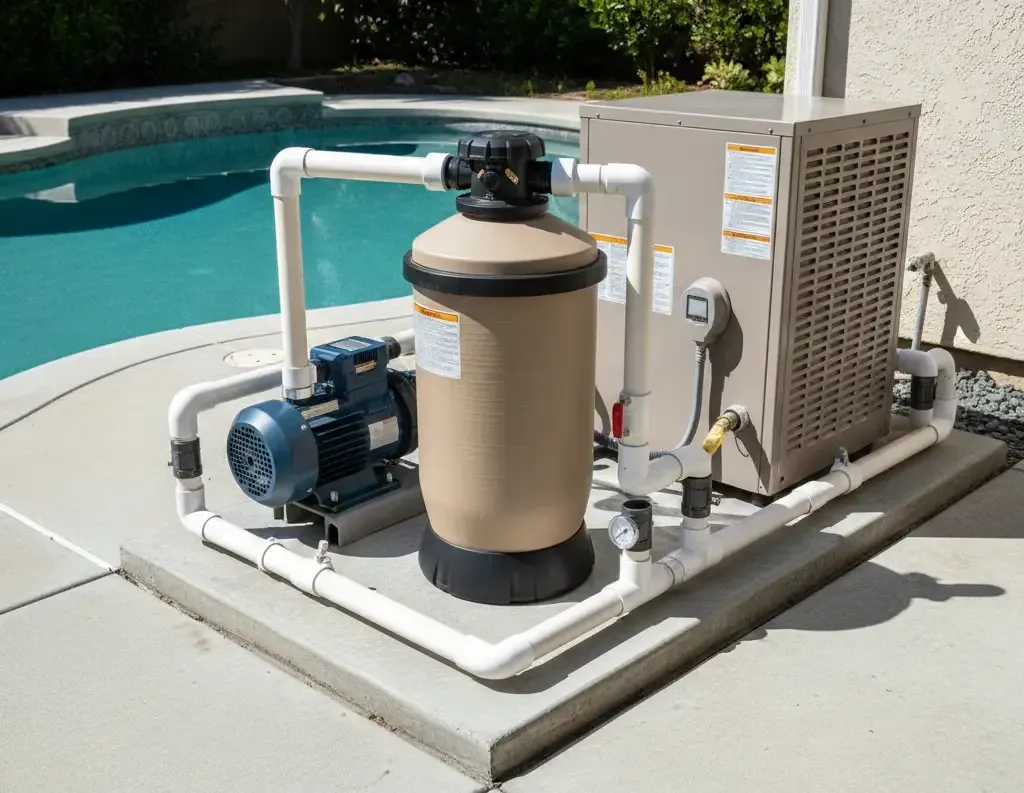
Pump Inspection We test motor amperage, check the impeller for damage, and examine shaft seals for leaks. A pump working too hard costs more to run and fails sooner.
Filter Assessment We record pressure readings, inspect cartridge or media condition, and test valve operation. Restricted flow means your pump strains and your water stays dirty.
Heater Evaluation We watch the ignition sequence, look for heat exchanger corrosion, and check gas connections. Small heater problems become expensive fast if left alone.
Electrical Check We test timers, confirm GFCI protection, and verify bonding compliance. Safe wiring protects your family and your equipment.
Plumbing Review We look for visible leaks, test valve function, and measure return flow. Weak circulation means poor water quality and wasted energy.
Annual Inspections Prevent Expensive Equipment Failures
Many Citrus Heights pool owners wonder if yearly inspections are worth the time. The answer comes down to simple math. Catching small problems early costs far less than emergency repairs or full replacements.
Seasonal temperature swings take a toll on pool equipment. Citrus Heights winters drop into the 30s and 40s. Summers push past 100 degrees for weeks at a time. That range causes seals and gaskets to expand, contract, and eventually crack.
Worn pump seals caught during an inspection cost a fraction of a flooded motor. A $50 seal replacement today prevents a $400 motor replacement next month. The same logic applies across your entire system.
Clogged filters force pumps to work harder than designed. That extra strain shortens motor life and drives up your electric bill. Annual filter checks keep flow rates healthy and pumps running at normal capacity.
Small heater issues grow quickly when ignored. A failing ignitor becomes a cracked heat exchanger if the unit keeps misfiring. Replacing a heat exchanger can cost more than half the price of a new heater.
Annual inspections also create documentation. Reports support home sale disclosures and give insurance adjusters the records they need. You get peace of mind and a paper trail that protects your investment.
California Pool Pump Regulations Require Variable-Speed Compliance
California law sets specific rules for pool pump efficiency. If you own an older single-speed pump, our inspection can tell you where you stand with current requirements.
Title 20 energy standards require variable-speed pumps for pools with motors rated at 1 horsepower or above. This rule affects most residential pools in Citrus Heights. Homes built before these standards often have single-speed pumps that no longer meet code.
The Rusch Park area has many homes built in the 1980s and 1990s. These properties commonly have original pool equipment that falls outside current compliance. An inspection documents your pump type, horsepower rating, and installation date.
Non-compliant pumps typically get flagged during two situations. Home sales often require equipment disclosure. Permit applications for pool work may trigger compliance reviews. Either scenario can delay your plans if you lack documentation.
During standard inspections, we assess upgrade options for pumps that need replacement. Variable-speed pumps cost more upfront but use far less electricity. Most Citrus Heights homeowners see lower utility bills within the first year.
Staying compliant protects you from potential fines. It also means your pool runs more efficiently through our hot summers. You get a quieter pump, lower energy costs, and equipment that meets state requirements.
Minor Repairs Extend Equipment Lifespan in Citrus Heights
Small problems get worse when ignored. A drip becomes a flood. A strange noise becomes a seized motor. On-site repairs during inspection visits stop that cycle before damage spreads.
Citrus Heights pools deal with hard Sacramento Valley water. That mineral content causes calcium buildup on seals, valves, and heating elements. Early descaling and part replacement keeps equipment working years longer than neglected systems.
Pump Seal Replacement A leaking pump seal lets water reach the motor. We carry common seal sizes and can swap them during your inspection. Fixing the seal now prevents motor replacement later.
Filter Cartridge Swaps Worn or collapsed cartridges restrict water flow. We stock popular cartridge models for quick replacement. Fresh media restores circulation and takes strain off your pump.
Heater Pilot and Ignitor Cleaning Dirty ignitors cause startup failures and error codes. We clean or replace these parts on-site when possible. Your heater fires reliably without a separate service call.
O-Ring and Gasket Replacement Valves and unions develop leaks when rubber parts dry out. We replace o-rings and gaskets before small drips become bigger problems.
Timer and Automation Troubleshooting Sunrise area homes with older control systems often have quirky timers. We diagnose programming issues and repair simple electrical faults during inspections.
Routine Maintenance Schedules Reduce Replacement Frequency
Pool equipment lasts longer when you stay ahead of wear. Scheduled inspections catch patterns that tell us when parts need attention. Proactive replacement costs less than waiting for failure.
Citrus Heights pools face specific challenges that affect maintenance timing. Oak pollen and debris from mature trees in Sylvan Corners clog filters faster than pools in newer developments. Heavy tree cover means more frequent filter checks.
Pump Lifespan: 8-12 Years Pumps reach the high end of that range with regular seal checks and proper water chemistry. Neglected pumps often fail around year six or seven.
Filter Media: 3-5 Years Cartridges and sand need replacement based on use and debris load. Pools near trees or heavy landscaping need fresh media sooner.
Heater Lifespan: 10-15 Years Heat exchangers stay healthy when kept clean and free of scale. Annual heater service pushes equipment toward that 15-year mark.
Salt Cell Replacement: 3-7 Years Output levels drop as cells age. We test cell performance during inspections and recommend replacement before chlorine production fails completely.
Seasonal Scheduling Citrus Heights summers demand more from pool equipment than mild spring months. We adjust inspection frequency based on your usage patterns and local conditions. Heavy-use pools benefit from checks twice per year.
What Does a Pool Equipment Inspection Include in Citrus Heights?
A pool equipment inspection in Citrus Heights evaluates all mechanical and electrical components that keep your pool safe and functional. Technicians examine pumps, filters, heaters, and automation systems for wear, leaks, and efficiency problems.
Pump motor performance and variable-speed compliance — We test amperage, check seals, and verify Title 20 requirements
Filter pressure, cartridge condition, and flow rates — We measure restriction and assess media health
Heater ignition, heat exchanger, and safety controls — We watch startup sequence and inspect for corrosion
Inspections identify minor issues before they become major repairs. Catching problems early keeps your Citrus Heights pool running through summer without unexpected breakdowns.
Frequently Asked Questions
How often should Citrus Heights pool equipment be inspected?
Citrus Heights pool equipment should be inspected at least once per year for most residential pools. Pools with heavy use or those near mature trees benefit from checks twice per year. Spring inspections prepare equipment for summer demand. Fall inspections catch wear from peak season before winter. Homes with older equipment or saltwater systems may need more frequent monitoring to stay ahead of part failures.
What equipment problems can be repaired on-site during an inspection?
Equipment problems that can be repaired on-site during an inspection include pump seal replacements, filter cartridge swaps, gasket and o-ring changes, timer adjustments, and minor electrical fixes. We also clean heater ignitors and pilots during inspection visits. These repairs take care of small issues before they require a separate service call or cause larger equipment damage.
Do pool equipment inspections check for California pump compliance?
Pool equipment inspections do check for California pump compliance under Title 20 variable-speed requirements. We document your pump type, horsepower rating, and installation date during every equipment check. This information confirms whether your pump meets current energy standards. Compliance records help during home sales, permit applications, and any situation requiring proof of regulation adherence.
What signs indicate pool equipment needs inspection in Citrus Heights?
Signs that indicate pool equipment needs inspection in Citrus Heights include unusual motor noise, visible water leaks around the pump or filter, weak water flow from returns, inconsistent heating, and tripped circuit breakers. Air bubbles in the pump basket or fluctuating filter pressure also signal problems. Any change from normal operation is worth checking before small issues become expensive failures.
Can minor pool repairs prevent full equipment replacement?
Minor pool repairs can prevent full equipment replacement in many situations. A leaking pump seal fixed early protects the motor from water damage. A clogged filter cleaned on schedule keeps the pump from overworking. A faulty heater ignitor replaced promptly prevents heat exchanger stress. Small investments in parts and labor extend equipment life by years.
When is the best time to schedule pool equipment inspection in Citrus Heights?
The best time to schedule pool equipment inspection in Citrus Heights is early spring before swim season or early fall after peak summer use. Spring inspections catch winter damage and prepare systems for heavy demand. Fall inspections identify wear from months of high use before equipment sits idle. Scheduling outside busy season also means faster appointment availability.
WORRIED ABOUT YOUR POOL EQUIPMENT?
Catch Small Problems Before They Become Big Repairs
Worn seals, clogged filters, and failing heaters cost more when ignored. We inspect every component and handle minor repairs on the spot. Same-week appointments available. Call today and protect your equipment.
WELCOME TO CAPITAL CLEAR POOL SERVICE
Reliable Pool Care. Done Right.